
Services

Every pathway begins
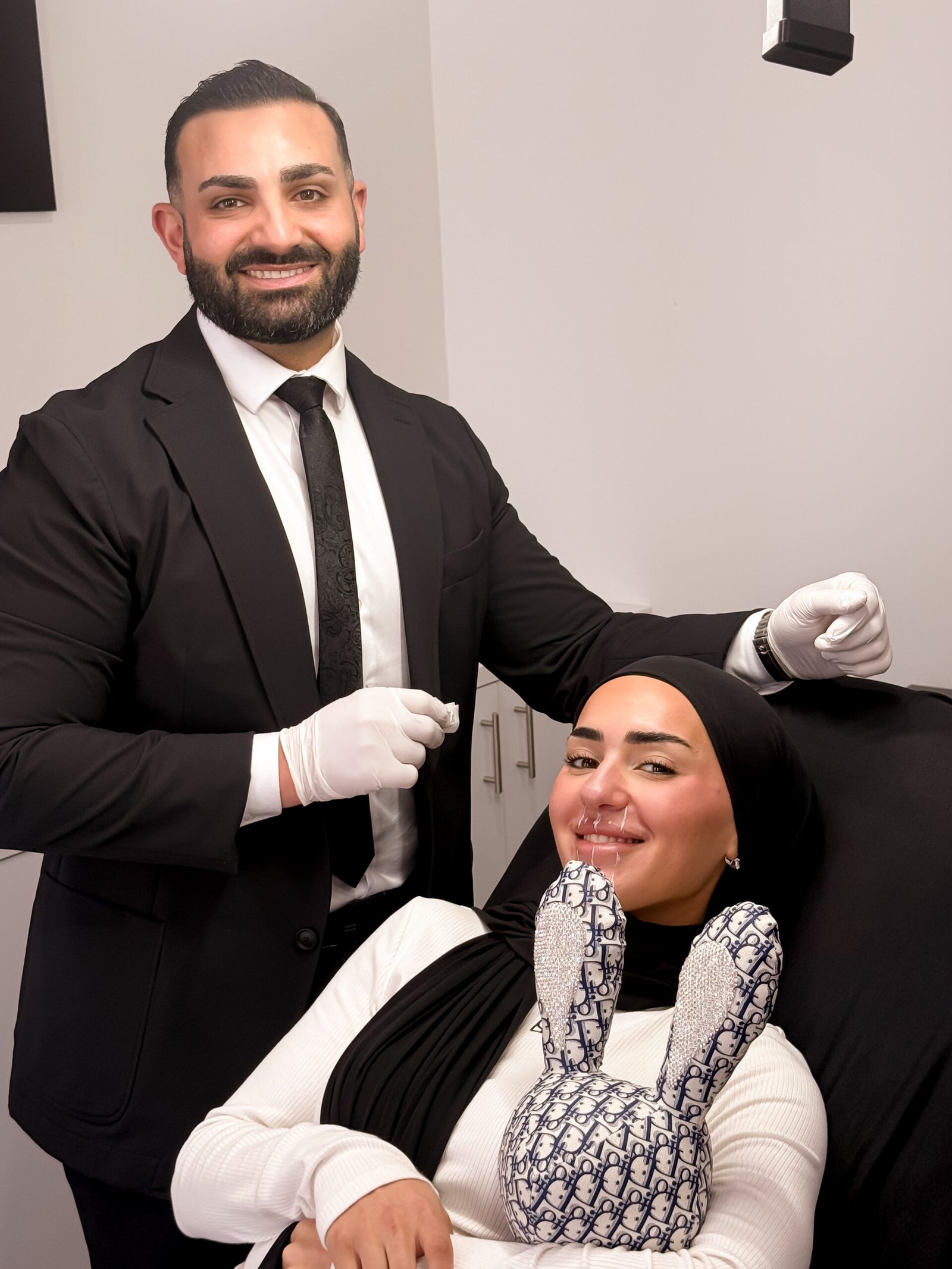
with an assessment
Every pathway at this practice begins with an assessment. Not with a product recommendation, not with a fixed treatment plan, not with a fee list. What follows a consultation depends on what the examination finds, and in some cases the recommendation is that nothing be done at all.
That is a legitimate outcome, and it is how a medical assessment differs from a sales meeting.
Dr Ibrahim Hawli
MBBS  ·  Registered Medical Practitioner  ·  Ahpra MED0002627622
Dr Ibrahim Client
In short
Concerns are grouped by anatomical region: upper face, midface, lips and lower face, neck, and medical and skin. Each concern has its own page with the anatomy, what an examination establishes, and what a cosmetic assessment can and cannot contribute. Every pathway begins with an in-person consultation. A consultation fee applies, no referral is required, and surgery is not performed at this practice.
01  /  Navigation

How this page is organized,
and how to use it

Concerns are grouped by the region of the face they belong to, because that is how the face is actually assessed. The upper face is examined together, the midface is examined together, the lower face and neck are almost always assessed as one unit, and medical and skin concerns sit in their own group.
If you already know what you are concerned about, jump to the relevant region below and click through to the specific concern page for the anatomy and the assessment detail.
If you are not sure, or if the concern you want to discuss is not exactly listed, book a consultation anyway. Many people arrive with one concern and leave with a different, more accurate understanding of what is actually driving what they noticed. That is the point of an in-person examination.
The concern pages themselves are the reference material. This page is the map.
02  /  Upper Face

Upper face
concerns

The forehead, brows, temples and the area around the eyes. Assessed together because the muscles and fat compartments interact.
Frontalis region
The horizontal lines that appear across the forehead with expression. Covers the anatomy of the frontalis and the difference between dynamic and static lines.
Glabellar region
The vertical lines between the brows. Covers the corrugator and procerus muscles that produce them.
Periorbital region
The lines at the outer corners of the eyes with smiling. Covers the orbicularis oculi anatomy.
Nasal region
The diagonal lines across the top of the nose that appear on animation. Small and specific.
Temporal region
Loss of soft tissue volume at the temples, which changes how the upper face and eye region read.
03  /  Midface

Midface
concerns

Cheeks, the nose, and the folds that form between them. This region is where a fold is often not a wrinkle, which changes what an assessment finds.
Midface region
Loss or redistribution of the fat compartments in the cheek. Covers why the cheek reads differently over time.
Tear trough region
The hollow below the lower eyelid, often confused with dark circles or eye bags. Three different things with different answers.
Structural region
The lines running from each side of the nose to the corner of the mouth. Structural boundaries, not creases.
Structural region
The shape, profile and asymmetries of the nose. Covers the anatomy and the types recognised in the literature.
04  /  Lips and Lower Face

Lips and lower
face concerns

The lips, the perioral region, the jawline, the chin, and the neck. Almost always assessed as one unit because the anatomy is connected.
Perioral region
The vertical lines that develop on the skin above the upper lip. Covers the orbicularis oris and the role of skin quality.
Perioral region
The shape, proportion and volume of the lips. Covers the vermilion, the philtrum, and how proportion is measured.
Lower perioral region
The lines running downward from the corners of the mouth. Covers the two fixed anatomical points that create them.
Contour region
Softening or loss of jawline definition. Covers mandibular change with age, where the studies disagree, and how the neck relates.
Mentalis region
Dimpling or a pebbly texture on the chin. Covers the mentalis muscle and the distinction from cleft chin.
Platysmal region
The vertical cords sometimes visible in the neck. Covers platysmal anatomy and why one in ten people is predisposed from birth.
05  /  Medical and Skin

Medical and
skin concerns

Conditions that sit at the boundary between medical and cosmetic, and skin quality broadly. Some require referral to a doctor, dentist or specialist as the first step.
Hyperhidrosis
Underarm, palm, sole or facial sweating. Covers the primary versus secondary distinction, and the Medicare pathway in Australia for eligible cases.
Bruxism
The awake and sleep forms of bruxism. Why the muscle enlarges over time, and why a dentist is central to diagnosis and management.
Clinical assessment
The categories of facial asymmetry. Why mild asymmetry is normal, and when new asymmetry needs urgent medical assessment.
Dermal assessment
Texture, tone, sun damage and general skin quality. Covers what proper skincare and sun protection actually contribute.
Dermal assessment
Approaches to skin quality and collagen. Covers what the published evidence supports and what the realistic timeline is.
06  /  What Happens

What a consultation
covers

Every service on this page begins with the same appointment. It runs 30 to 45 minutes and has four parts.
01

Discussion

Your history, what you have noticed, when it changed, current medications, any previous cosmetic work, and anything relevant depending on the concern.
02

Examination

The area is examined at rest and in movement. Palpation of tissue quality, assessment of muscle activity, measurement of proportion, and checking symmetry.
03

Information

What the examination found, what is driving it, what is clinically appropriate, the realistic outcome, the risks, the alternatives including doing nothing.
04

Decision

You are not asked to decide during the appointment. You leave with the information and the time to consider it.
Read the full consultation page for the questions you will be asked, the questions you should ask any practitioner, and how informed consent works under the current AHPRA guidelines.
Dr Ibrahim Hawli
07  /  Your Practitioner

Who conducts
your consultation

Your consultation is with Dr Ibrahim Hawli, MBBS, a medical practitioner registered with the Australian Health Practitioner Regulation Agency. His registration number is MED0002627622 and can be verified on the public register at ahpra.gov.au.
He holds Level 1 Certification with the American Academy of Aesthetic Medicine and has completed advanced training in non surgical nasal assessment with Aesthetic Intelligence. The assessment, the discussion of options, and the consent conversation are all conducted by him directly rather than delegated.
08  /  Scope

What is
not offered here

Stating this plainly is more useful than a padded list. Under the AHPRA guidelines a practitioner must not imply a scope they do not hold.

Surgery is not performed at this practice

Where a surgical opinion is the appropriate course, referral is what will be recommended. This applies to procedures involving the lifting or removal of tissue, formal rhinoplasty, blepharoplasty, and any bone or skeletal work.

Diagnosis of dental and bite conditions

Where the assessment finds tooth wear, temporomandibular joint symptoms or occlusal problems, a dentist or oral medicine specialist is where you will be directed.

Diagnosis of skeletal asymmetry

Where the assessment finds skeletal asymmetry, jaw disproportion, or dental malocclusion, referral to an orthodontist and maxillofacial surgeon is what will be recommended.

Diagnosis of neurological conditions

Facial weakness, sudden asymmetry, and other neurological findings are assessed medically. Where these are suspected, GP or emergency referral is the appropriate course.
Cosmetic procedures for patients under 18 that fall within the categories flagged as inappropriate in the AHPRA guidelines are not performed. Advertising cosmetic procedures to anyone under 18 is prohibited, and nothing on this site is directed at that audience.
09  /  Fees and Booking

Fees and
booking

A consultation fee applies and is confirmed when you book. It covers the appointment time, the examination, the clinical record and the discussion of options.
The fee is charged for the consultation itself, as a clinical service. It is not conditional on proceeding with anything, and there is no financial advantage in deciding to proceed. That is deliberate.
Where a procedure is appropriate and you decide to proceed, the total cost is confirmed in writing before anything is performed. No referral is required to attend.
10  /  Location

Cosmetic services in Melbourne:
where the clinic is

The practice is in Glenroy, in the City of Merri Bek, roughly 13 kilometres north of the central business district. The clinic is on Glenroy Road, close to Glenroy Station on the Craigieburn line and the Pascoe Vale Road corridor.
Patients attend from Glenroy, Hadfield, Fawkner, Oak Park, Gowanbrae, Pascoe Vale, Coburg North, Broadmeadows, Campbellfield and Craigieburn.
11  /  Common Questions

Questions patients
ask

If your question is not answered here, ask it at your consultation. There is time set aside for exactly that.

At this practice, concerns assessed cover the upper face, midface, lips and lower face, neck, and specific medical or skin conditions such as excessive sweating and jaw clenching. Every concern has its own page setting out the anatomy, the assessment approach, and what is realistic.

No. Most people arrive with a concern rather than a specific procedure in mind, and part of the consultation is establishing what is actually driving what you have noticed. Sometimes the answer is different from what the patient assumed.

No. Surgery is not performed at this practice. Where a surgical opinion is appropriate, referral to a suitable specialist is what will be recommended.

No. You can book directly. Where your concern turns out to have a medical cause rather than a cosmetic one, a referral to the appropriate practitioner will be provided at consultation.

The appointment runs 30 to 45 minutes. A consultation fee applies and is confirmed when you book. The fee is not conditional on proceeding with any procedure.

Book a consultation and describe it. The concerns listed here are the ones most commonly presented, but the assessment covers the whole face. If what you want is genuinely outside the scope of this practice, that will be identified at consultation and referral will be provided.

The one that most closely matches what you have noticed. If several sound relevant, that is common, because concerns often overlap. The consultation covers the whole face regardless of which page you booked from.

By calling 0404 342 222 or emailing info@tajmeelcliniq.com.au. Appointments are by arrangement.

Dr Ibrahim Hawli
Written and clinically reviewed by
Dr Ibrahim Hawli, MBBS
Registered medical practitioner, Ahpra registration MED0002627622. Level 1 Certification, American Academy of Aesthetic Medicine. Advanced training in non surgical nasal assessment with Aesthetic Intelligence.
Last reviewed: [insert month year]  ·  Next review due: [insert month year]

Assessment first.

Everything else after.
This page provides an overview of cosmetic medical services and does not constitute medical advice. Any cosmetic medical procedure carries risks. Individual outcomes vary and not all people are suitable candidates. Surgery is not performed at this practice. Any decision follows an individual consultation and assessment with a registered medical practitioner.