
Cosmetic consultation: what happens,
Some consultations end with a plan. Some end with a recommendation to do nothing. Some end with a referral to a different practitioner. All three are legitimate outcomes.
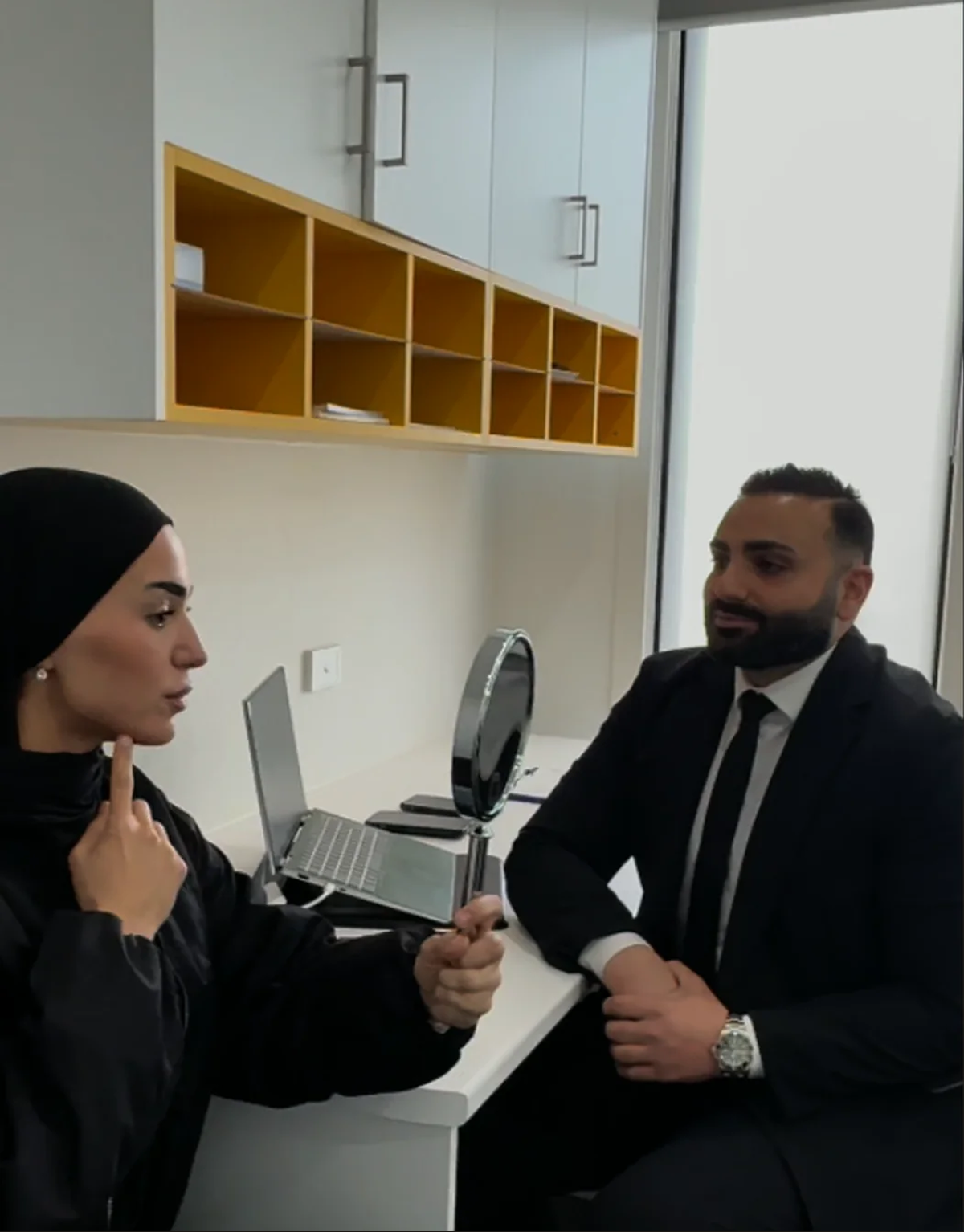
Why assessment comes
before anything else
Who you
will see
What happens at a
cosmetic consultation
History and discussion
Examination
Information
Decision
What is
assessed
- The structure or mechanism actually producing what you have noticed
- Whether the finding is dynamic, meaning present only in movement, or established at rest
- Skin quality, thickness and elasticity in the area
- Proportion and symmetry, measured rather than estimated
- Relevant anatomical variants, which are established by palpation
- Whether findings in neighbouring areas are contributing
- Medical history and medications relevant to the area
- Whether any red flag findings are present that require medical assessment first
- Whether anything is clinically appropriate at all, including the option of nothing
The questions you will
be asked, and why
The questions
- What are your qualifications, and what is your registration number
- Who will be performing the procedure
- What is actually causing my concern, anatomically
- What are the realistic limits here
- What are the risks, including the uncommon ones
- What are the alternatives, including doing nothing
- What happens if I am not happy with the result, or if there is a complication
- How long will I need before I look normal again
- What is the total cost, including any follow up
- Is there any pressure to decide today
Informed consent,
in plain language
You should leave able to explain, in your own words
- What is actually happening in the area you are concerned about
- What is proposed, and what it will and will not change
- What the realistic outcome is, not the best possible outcome
- What the risks are, including the uncommon ones
- What the alternatives are, including doing nothing at all
- What the recovery looks like, day by day
- What the total cost is
- Who to contact if something is not right, and when
Your right to time
before deciding
When the recommendation
is to do nothing
The finding is not what was assumed
The anatomy makes it unachievable
The first step belongs elsewhere
Intervening would create a problem
If you are
under 18
- Consent is assessed individually for maturity and capacity
- The views of a parent or guardian are considered
- A cooling off period of at least seven days between informed consent and any procedure is mandatory
- No money is payable until after that period, other than for the initial consultation
- The patient is encouraged to discuss their reasons with an independent registered health practitioner during that time
What to bring
- A list of your current medications, including anything over the counter and any supplements
- Details of any previous cosmetic work, with approximate dates
- Relevant medical history, particularly thyroid, autoimmune, bleeding and neuromuscular conditions
- Any dental or orthodontic history, if your concern involves the lower face or jaw
- A photograph of yourself from several years ago, if you have one
- Your answers to any self test described on the relevant concern page
- Your own list of questions
Fees and what is included
Where the clinic is
Questions patients
ask
The appointment runs 30 to 45 minutes and has four parts: a discussion of your history and what you have noticed, an examination of the area at rest and in movement, an explanation of what was found along with risks and alternatives, and then time to decide. You are not asked to commit on the day.
No. You can book directly. Where your concern turns out to have a medical cause rather than a cosmetic one, a referral to the appropriate practitioner will be provided.
No. A consultation fee applies and is confirmed when you book. The fee covers the appointment, the examination and the clinical record, and it is not conditional on proceeding with anything.
Dr Ibrahim Hawli, MBBS, a registered medical practitioner, Ahpra registration MED0002627622. The assessment and the consent discussion are conducted by him directly.
No. You are not asked to decide during the appointment, and you will not be given a reason to hurry. Time to consider the information is part of informed consent.
Ask about qualifications and registration number, who will perform any procedure, what is actually causing your concern, the realistic limits, the risks including uncommon ones, the alternatives including doing nothing, what happens if there is a complication, the full recovery timeline, and the total cost. A practitioner who answers these openly is telling you something useful.
That is a legitimate outcome and it happens. Sometimes the finding is not what was assumed, sometimes the anatomy makes the desired result unachievable, and sometimes the appropriate first step belongs to a dentist, a general practitioner or a surgeon. You will leave understanding why.
Yes, at any point before anything is performed, and without giving a reason.
As long as you want. For patients under 18 a cooling off period of at least seven days between consent and any procedure is mandatory. For adults this practice applies the same principle by choice.
No. Tissue quality, muscle activity, tethering points and anatomical variants are established by examination and by watching a face move. None of that is possible from an image.
Read about your concern first

Assessment first.
This page provides general information about cosmetic medical consultations and does not constitute medical advice. Any cosmetic medical procedure carries risks. Individual outcomes vary and not all people are suitable candidates. Surgery is not performed at this practice. Any decision follows an individual consultation and assessment with a registered medical practitioner.