
Hollow under eyes: what causes
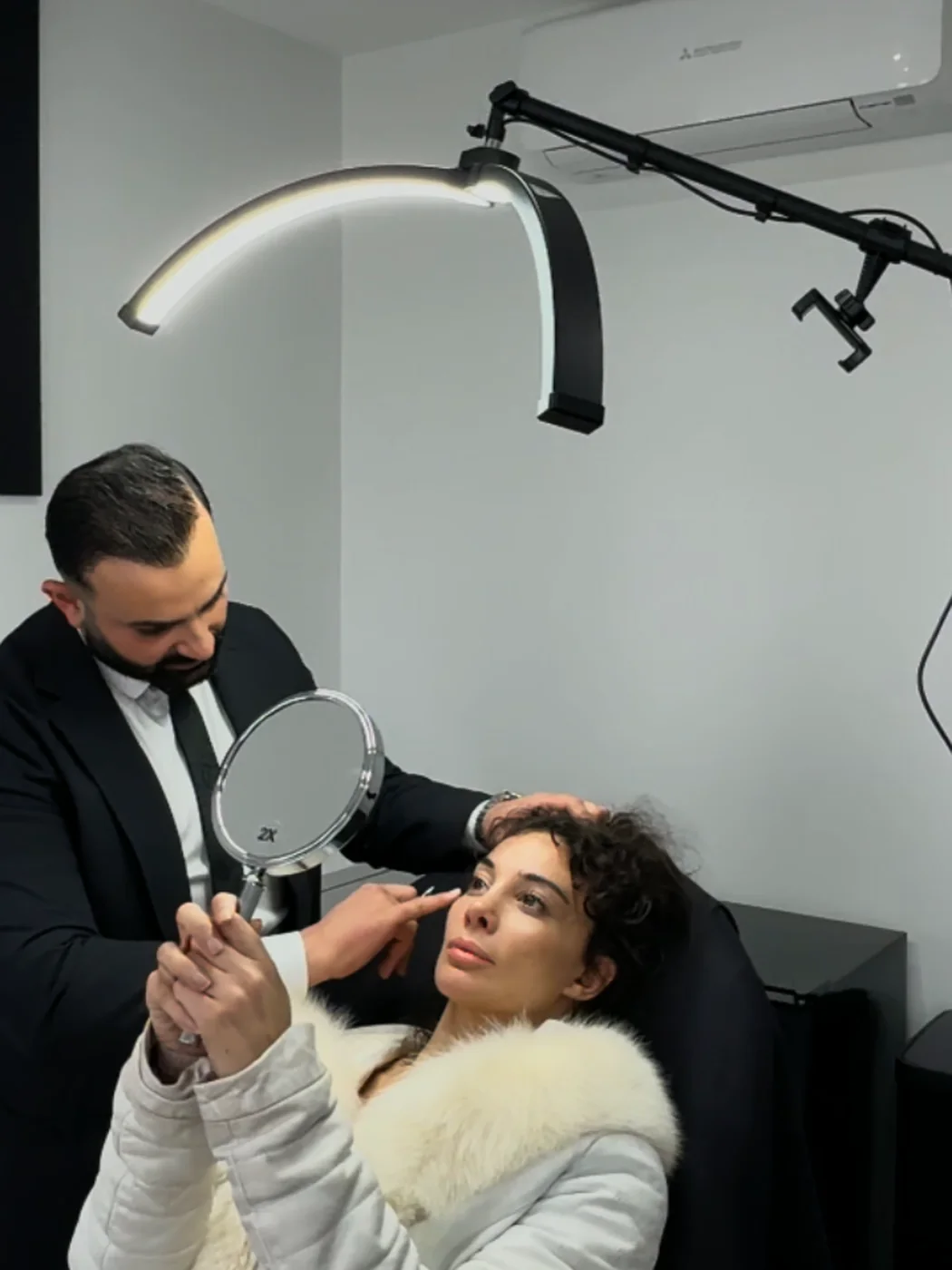
Hollows, bags and dark circles
A hollow
A bag
A protrusion. Orbital fat herniates forward through a weakening septum, the wall that holds fat behind the eye. Worse in the morning, after salty food, or when tired.
A dark circle
Why the darkness is usually
shadow, not pigment
What actually creates
a hollow under eye
Volume reduction
Ligament behaviour
Midface descent
Position of the eye
Skin thinning
Inherited anatomy
The tear trough is anchored
by a real ligament
How to fix under eye hollows:
what works on what
A self-test you can
do right now
When a hollow and a bag
occur together
When under eye hollows
are a medical question
- Sudden change in the appearance of one or both eyes
- Swelling that varies day to day, or is worse on waking and does not settle
- Associated nasal congestion, itching or a seasonal pattern
- Any change in vision, eye discomfort, or pressure behind the eye
- Known thyroid disease, or symptoms suggesting it
- Unexplained fatigue alongside the change
What an under eye hollows
treatment assessment covers
- Depth and extent of the groove, and whether it is a true depression or an apparent one
- Whether the darkness is shadow, pigment, vessel visibility, or a combination, assessed under direct light
- Presence and degree of orbital fat prolapse
- Skin quality, thickness and laxity, and whether vessels are visible through it
- Lower lid tone and position
- Cheek volume and contour, since midface support directly influences how the groove reads
- Whether the midface has descended, and whether that is contributing
- Symmetry between sides, which is very common to differ and frequently unnoticed
- Medical history, including thyroid disease, allergy and any recent change
- Whether anything is clinically appropriate, including the option of nothing, and whether a surgical or medical referral is the better course
What to know before
your consultation
Factors that may make an approach inadvisable
- Pregnancy or breastfeeding
- Active infection or inflammation of the eyelid or surrounding skin
- Significant orbital fat prolapse, where a surgical opinion is the appropriate course
- Marked skin excess or lower lid laxity
- Pre-existing dry eye disease
- Certain autoimmune, bleeding or connective tissue conditions
- Certain medications, including blood thinning medication
- Undiagnosed swelling or asymmetry, which should be medically assessed first
- Expectation that pigmentation will improve through a change in contour
- Unrealistic expectations about achievable change
What happens at your consultation in Glenroy
Discussion
Assessment
Information
Decision
Assessment for patients across Melbourne's northern suburbs
Questions patients
ask
Reduction of the fat compartments between the lower lid and cheekbone, weakening of the retaining ligament, descent of the midface, forward displacement of fat within the socket, and thinning of very thin skin. Some people have a visible groove from their twenties because of inherited bony anatomy rather than any loss.
No. A hollow is a depression that casts a shadow. A dark circle is a discolouration, which can come from that shadow but can equally come from pigmentation, from blood vessels visible through thin skin, or from chronic inflammation. They need different answers.
Stretch the skin below the hollow gently downward with a fingertip. If the darkness reduces noticeably, it is largely shadow. If it stays the same, pigment or vessel visibility is more likely. Direct examination confirms it.
No. A shadow cast by a contour cannot be lightened from the surface. Skin-directed care can improve skin quality, thickness and genuine pigmentation over months, and daily sun protection to the orbital rim is worthwhile regardless. It will not change a depression.
No, and this is important. A bag is orbital fat pushing forward through a weakened septum. It is structural and progressive, and it does not respond to creams, massage or lymphatic drainage. Where a hollow and a bag coexist, addressing the hollow alone can make the puffiness look more pronounced.
Asymmetry here is very common. Bony rim contour differs between sides, fat compartments are rarely identical, and habitual sleeping position contributes. It is often unnoticed until it is pointed out.
If the change was sudden, if swelling varies a lot day to day, if there is any change in vision or eye discomfort, if you have thyroid disease or symptoms of it, or if there is an allergic pattern with nasal symptoms. Those need a medical assessment first.
A consultation fee applies and is confirmed when you book.
The midface is assessed as a whole
