
Concerns  /  Lips and Lower Face  /  Lip Shape and Volume

Lip shape and volume: what changes,
and why volume is only part of it
Most people who look at their lips and think something has changed reach for a single word to describe it: volume.
It is usually the wrong word, or at least an incomplete one. Lips change in five separate ways as they age, and volume is one of the five.
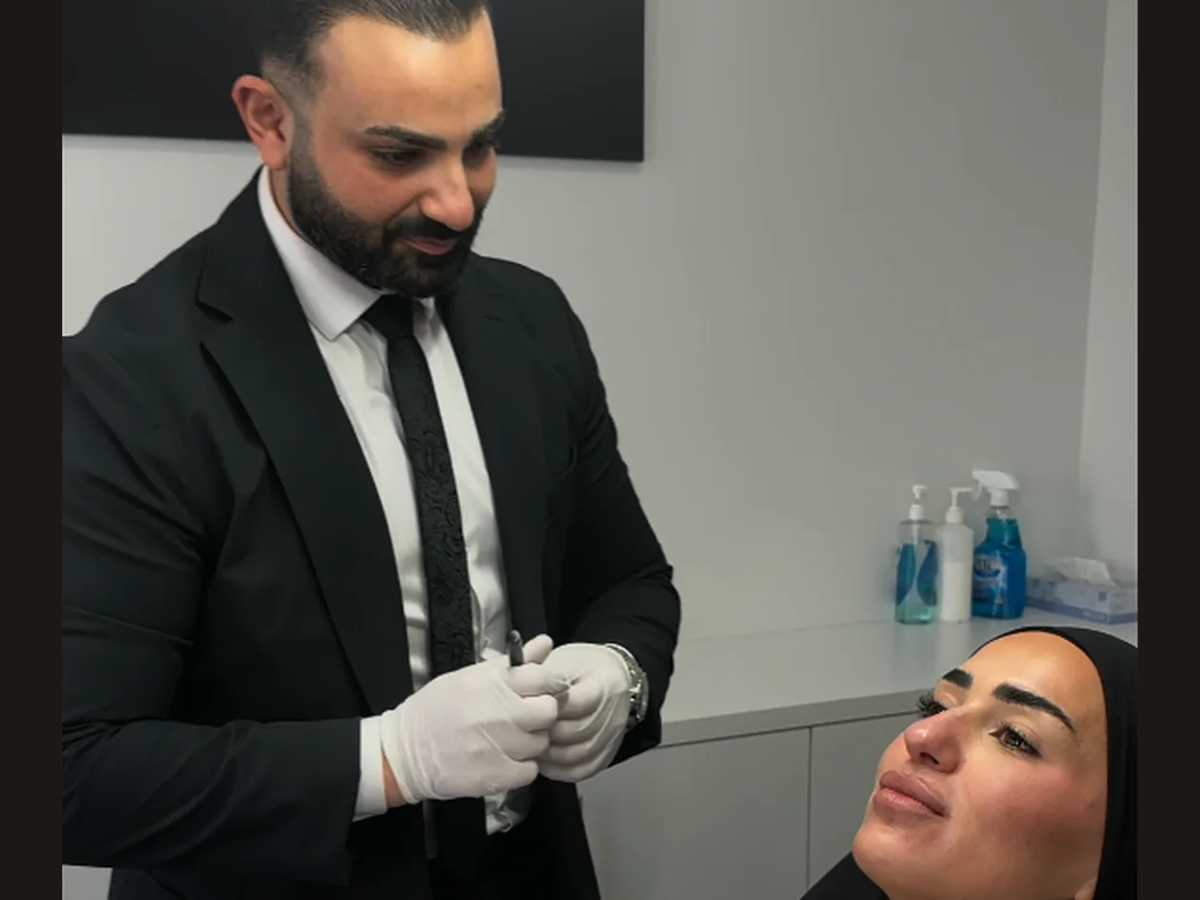
Dr Ibrahim Hawli
MBBS  ·  Registered Medical Practitioner
In short
Lip ageing involves five concurrent changes: volume reduction, flattening of the Cupid’s bow, lengthening of the philtrum, decline in tissue quality, and loss of lip colour. Volume is one of them. Lips also get wider with age while the pink part shrinks, and the philtrum lengthens by around 5.5 mm on average, which rotates the lip inward and reduces how much pink shows. The published ideal proportions disagree with each other and are population-specific.
01  /  Anatomy

What the lip is
actually made of

Understanding the parts makes the rest of this page make sense.
The upper lip is described as three subunits, the central philtrum and two lateral portions. The lower lip is a single subunit. That matters because a change confined to one subunit is a different problem from a change across the whole lip.
The vermilion
The pink portion. It lacks keratin and contains a rich vascular network, which is where its colour comes from. It divides into a dry portion exposed to air and a wet portion on the inner surface.
The vermilion border
The junction between skin and vermilion, sometimes called the white roll.
The Cupid's bow
The M-shaped curve of the upper vermilion border, formed by two high points with a dip between them.
The philtral columns
Two raised vertical ridges running from the Cupid’s bow peaks up toward the nose, with the philtrum as the midline depression between them.
The labial tubercle
The small fleshy prominence at the centre of the upper lip.
Orbicularis oris
Beneath all of it. Provides tissue volume and maintains oral competence, meaning the ability to hold the lips sealed.
02  /  The Key Idea

Five things change, and

volume is one of them
Lip ageing is not one process. It is five, running concurrently.
Volume restoration addresses one of these five. That is not a criticism of it. It is the reason a lip that has flattened, lengthened and desaturated does not look right when only volume is added. The other four are still there, and now there is more tissue sitting on an unchanged architecture.
01

Volume reduction

The most discussed and the most treated.
02

Architectural flattening

The Cupid’s bow loses definition as the vermilion border loses structural support.
03

Philtral lengthening

The distance from the base of the nose to the Cupid’s bow increases, rotating the vermilion inward.
04

Tissue quality decline

The dermis thins and loses elasticity, as it does everywhere, but with less to start with here.
05

Colour desaturation

The lip loses its pink and becomes less distinct from the surrounding skin.
Accurate assessment of architecture, proportion, tissue quality and colour together, rather than volume alone, is the clinical prerequisite for a proportionate result.
03  /  Often Missed

Why lips lose colour
without losing volume

This one surprises people, and it is measurable.
Two things happen independently of any structural change. Submucosal vascular density reduces, so there is less blood supply producing the pink. And vermilion melanocyte activity declines.
The result is progressive desaturation. The lip looks duller and less distinct from the skin around it, and the border between the two becomes harder to see.
A lip in that situation has not lost volume. It has lost contrast. Adding volume to it produces a bigger lip that still reads as indistinct, which is not what the person was actually asking for.
04  /  The Ageing Clock

The philtrum is
the ageing clock

The cutaneous philtrum is the distance between the base of the columella and the Cupid’s bow. It lengthens progressively with age, through soft tissue descent and weakening of the perioral support structures.
As the philtrum elongates, the vermilion rotates inward and downward. Visible pink tissue reduces in front view. The Cupid’s bow becomes obscured. The result is the characteristic aged upper lip: long, flat, with little pink showing.
14 mm
Youth, in women
Approximate cutaneous philtral height in younger adults.
20 mm
Older adulthood
Nearly 20 mm by older adulthood in the same measured population.
5.5 mm
Mean increase
The measured average lengthening across a lifetime.
A lengthening philtrum relative to vermilion height is one of the earliest and most reliable indicators of perioral ageing, and it is measured at assessment rather than estimated.
It is also the reason some patients are better served by a surgical opinion than a volume approach. Where the philtrum is the dominant problem, shortening it addresses the cause. Surgery is not performed at this practice, and referral is the recommendation in those cases.
05  /  Measured Data

Lips get wider
as well as thinner

The assumption is that lips shrink. The measured picture is more specific than that. A stereophotogrammetric study of 169 women across four age groups from 20 to 60 found the following.
Lip width
Increased significantly with age
Philtrum width
No obvious change
Cutaneous upper and lower lip height
Increased, lengthening the lip vertically
Upper vermilion height
Decreased
Vermilion border
Flattened
So the lip becomes longer and wider while the pink portion becomes shorter. That combination is why an older lip reads as flat rather than simply smaller, and why adding volume without addressing width and border definition produces a result that looks inflated rather than restored.
Worth noting that this study was conducted in Chinese women, and the authors framed it as filling a gap because most anthropometric data comes from Caucasian populations.
06  /  Proportion

Lip proportion, and why the
published ideals disagree

You will find a single ideal ratio quoted confidently across the internet. There is more than one, and they do not match.
1 : 1.5
Stated as the ideal vertical height ratio between upper and lower lip by one widely cited source.
1 : 1.6
Stated by another, specifying that it applies to Caucasian women. Both are presented as though universal. They are not.
Other figures circulate alongside them: that the upper lip should project around 2 mm in front of the lower in profile, and specific distances from nose to upper lip and lower lip to chin. These are useful reference points for recording a baseline. They are not a target, and treating a face toward a published average is how a result stops looking like the person.
Heavy lower lip
A lower lip that reads as heavy may be genuinely disproportionate, or the upper lip may have shortened and rotated inward, making a normal lower lip appear dominant by comparison. Those are opposite problems with opposite answers, and telling them apart requires measurement rather than impression.
07  /  The Real Question

Too much lip: how results

end up looking overdone
This is what most people are actually worried about, and it is rarely discussed on a page that is also selling.
Overdone results generally come from four things, and none of them is the patient’s fault.
01

Treating volume when the problem was architecture

If the Cupid’s bow has flattened and the philtrum has lengthened, adding volume produces a fuller lip with the same lost definition. It reads as inflated because the shape underneath was never addressed.
02

Ignoring the width change

A lip that has widened with age and then receives volume becomes both wide and full, which is a proportion the face did not previously have.
03

Treating toward an average rather than a face

Published ratios describe populations. A person whose natural proportions sit outside a quoted average and is treated toward it will look changed rather than refreshed.
04

Incremental accumulation

Repeated small additions over years, each reasonable in isolation, without a fresh assessment of the whole. The most common route to a result nobody chose.
The protection against all four is the same. Assess architecture, proportion, tissue quality and colour before considering volume, measure rather than estimate, and be willing to conclude that the appropriate recommendation is to do nothing.
Some consultations at this practice end that way. That is a legitimate clinical outcome, not a failed appointment.
08  /  What Responds

Lip volume enhancement is not the
answer to every lip concern

Several of these do not respond to volume at all. One of them is better addressed surgically. Establishing which row applies to you is the entire purpose of an assessment.
What you have noticed
What is likely driving it
Lips look smaller than they were
Volume reduction, possibly with vermilion height loss
Lips look flat rather than small
Architectural flattening and border definition loss
Less pink shows when I smile or in photos
Philtral lengthening and inward rotation
Lips look dull, blend into my face
Colour desaturation, independent of volume
Lower lip looks heavy
Either genuine disproportion or upper lip shortening
Lipstick migrates into lines above the lip
Perioral skin quality, a separate concern
One side looks different
Asymmetry, which is near universal and often long-standing
09  /  Why Examination Matters

The anatomical variant a
practitioner should feel for

The labial arteries run within the submucosa of the vermilion and mucosa transition, deep to the orbicularis oris muscle, with small branches supplying the skin portions of both lips.
Caliber-persistent labial artery

A normal variant, and a reason to palpate

In some people an artery fails to taper properly during its course and persists at full calibre. It presents as a palpable, tortuous vessel running two to three millimetres below the vermilion border, and eighty per cent of cases affect the lower lip.
It is benign. It requires no treatment. Diagnosis is by Doppler ultrasound rather than biopsy.
The reason it belongs on this page is that a practitioner working in this region should be palpating for it, and should recognise it if it is there. It is exactly the kind of variant that examination catches and a photograph cannot.
10  /  Assessment

What a lip
assessment covers

Photographs may be taken as a clinical record, in standard front and side views, and are not used for advertising.
11  /  Before You Decide

What to know before
your consultation

Every option carries potential risks as well as potential benefits, and no cosmetic medical procedure is risk free. In this region the specific consideration is that the labial arteries run deep to the muscle within a small area, and that the muscle involved maintains oral competence and speech.
Bring a list of your current medications, details of any previous lip work including approximate dates, and a photograph from several years ago if you have one.
Assessed at consultation

Factors that may make an approach inadvisable

Individual results vary. Not all people are suitable candidates. In some cases the appropriate recommendation is that nothing be undertaken, or that a different practitioner is the right person to see.
12  /  What Happens

What happens at your consultation in Glenroy

Appointments run 30 to 45 minutes. A consultation fee applies and is confirmed when you book. No referral is required to attend.
01

Discussion

What you have noticed, when it changed, what you are hoping for, medical history, current medications and any previous lip work.
02

Assessment

The lips are examined and measured at rest, on smiling and in speech, with palpation of tissue quality and for anatomical variants, and assessment of proportion, architecture and colour.
03

Information

Which of the five processes is dominant in your case, what is clinically appropriate, whether referral is the better course, risks, alternatives and the option of proceeding with nothing.
04

Decision

You are not asked to decide on the day. Time to consider information is part of informed consent.
13  /  Service Area

Assessment for patients across Melbourne's northern suburbs

The clinic is on Glenroy Road, close to Glenroy Station and the Pascoe Vale Road corridor. Patients attend from Glenroy, Hadfield, Fawkner, Oak Park, Gowanbrae, Pascoe Vale, Coburg North, Broadmeadows, Campbellfield and Craigieburn.
14  /  Common Questions

Questions patients
ask

If your question is not answered here, ask it at your consultation. There is time set aside for exactly that.

Five things change at once: volume reduces, the Cupid’s bow flattens, the philtrum lengthens and rotates the lip inward, tissue quality declines, and lip colour desaturates. Measured data also shows lips get wider and longer while the pink portion shortens, which is why an older lip reads as flat rather than simply smaller.

Overdone results usually come from treating volume when the problem was architecture, ignoring the width change, treating toward a published average rather than your own proportions, or accumulating small additions over years without a fresh assessment. Measurement rather than impression protects against all four.

The published figures disagree. One widely cited source states 1:1.5 upper to lower, another states 1:1.6 and specifies Caucasian women. Both are presented as universal and neither is. They are useful for recording a baseline, not as a target.

Either the lower lip is genuinely disproportionate, or the upper lip has shortened and rotated inward, making a normal lower lip appear dominant. Those are opposite problems with opposite answers, and telling them apart requires measurement.

Probably not. Submucosal vascular density and vermilion melanocyte activity both decline with age, which desaturates lip colour independently of any structural change. The lip has lost contrast rather than size, and adding volume produces a bigger lip that still reads as indistinct.

The philtrum is the distance from the base of the nose to the Cupid’s bow. It lengthens by a mean of 5.5 mm between youth and older adulthood, from around 14 mm to nearly 20 mm in women, which rotates the lip inward and reduces visible pink. Where it is the dominant problem, a surgical opinion is the appropriate course.

No. Proportion is measured, tissue quality and anatomical variants are established by palpation, and oral competence is assessed in movement. None of that is possible from an image.

A consultation fee applies and is confirmed when you book.

Related concerns

The perioral area is assessed as a whole
Perioral region
Lower perioral region
Structural region
Mentalis region
Dr Ibrahim Client
Written and clinically reviewed by
Dr Ibrahim Hawli, MBBS
Level 1 Certification, American Academy of Aesthetic Medicine. Advanced training in non-surgical nasal work with Aesthetic Intelligence.
Last reviewed: [insert month year]  ·  Next review due: [insert month year]

Your first step is

an assessment.
This page provides general information about cosmetic medical consultations and does not constitute medical advice. Any cosmetic medical procedure carries risks. Individual outcomes vary and not all people are suitable candidates. Surgery is not performed at this practice. Any decision follows an individual consultation and assessment with a registered medical practitioner.