
Concerns  /  Facial Asymmetry

Facial asymmetry: what causes it,
and when it needs a doctor
The two sides of your face are not identical. Nobody’s are. Mild facial asymmetry is the normal biological situation in humans, and the medical literature is unambiguous about that.
The reason to read further is that not all facial asymmetry is normal, and telling the difference is a medical judgment rather than a cosmetic one.
Dr Ibrahim Hawli
MBBS  ·  Registered Medical Practitioner
In short
Mild facial asymmetry is universal and estimated to be present in 21 to 85 per cent of people depending on how it is measured. Sudden new asymmetry, particularly with drooping of one side of the face, can be a stroke or Bell’s palsy and needs emergency medical assessment. Congenital and skeletal asymmetry are assessed and managed by paediatric craniofacial specialists, orthodontists and maxillofacial surgeons. Age related soft tissue asymmetry, including asymmetry from chewing side dominance and muscle activity, is the narrow part a cosmetic assessment contributes to.
Emergency  /  Read First

When new asymmetry

is an emergency
Read this section carefully. It is placed here rather than at the bottom for a reason.
Sudden new asymmetry, particularly with drooping of one side of the face, can be a stroke. If it appeared within minutes to hours, and particularly if you also have weakness on one side of the body, difficulty speaking, difficulty seeing, or sudden severe headache, call an ambulance immediately. Do not wait to see if it passes. Stroke treatment is time critical, and the window for effective intervention is measured in hours.
The FAST test
F
Face
Does one side of the face droop when you smile
A
Arms
Can you raise both arms and keep them raised
S
Speech
Is your speech slurred or difficult
T
Time
If any of these are present, call 000 immediately
New facial weakness that develops over hours to a day or two, without the other stroke features, can be Bell’s palsy or another facial nerve condition. It is not usually an emergency in the same way as stroke, but it does need urgent medical assessment within days, because early treatment improves the outcome. The correct route is a general practitioner or an emergency department, not a cosmetic clinic.
None of the above belongs in a cosmetic consultation. If any of it describes what has happened to your face, close this page and seek medical help.
01  /  Start Here

Mild asymmetry is
normal, and universal

This is the first thing to say, and most pages on this subject leave it out entirely.
The medical literature is direct about it. Mild facial asymmetry is very common in the general population. Most people have slight facial asymmetry, and this is the normal biological situation in humans. Estimates of how many people show measurable asymmetry range from 21 per cent to 85 per cent, and the wide range simply reflects how strict you are about measurement.
21 to 85%
show measurable asymmetry
The wide range reflects measurement strictness. On careful examination, almost everyone shows some asymmetry. There are anatomical reasons: the two halves of the face develop separately in the embryo and fuse in the midline, with small differences remaining in bone, muscle, teeth and the nose.
02  /  Try This Now

How symmetric
is normal

Two common ways to check, both informative. Neither replaces an examination.
Test 1  ·  The mirror test
Stand in front of a mirror in even light and look at your face at rest. Then smile. Then close your eyes briefly and open them together. Look for whether one eyebrow sits higher, whether one eye is larger or closes at a different rate, whether the corners of your mouth pull evenly, whether one side of your smile lifts more, and whether your chin sits on the midline of your neck.
Test 2  ·  The photographic split
Take a straight on photograph in even light. If a photo editor is available, mirror one half of the face and compare that composite to a mirror of the other half. Most people are startled by the result. The version made of two right sides and the version made of two left sides can look like different people, and that is the general case. It is not evidence that something is wrong.
What both tests genuinely establish is that some degree of asymmetry is present, which sets the baseline against which any change can be assessed later.
03  /  The Categories

The five categories
of facial asymmetry

Asymmetry is not one thing. It has at least five distinct categories, and they matter because each one has a different cause, a different urgency, and a different practitioner responsible for it.
Establishing which category applies to you is the point of an assessment, and it is not something a photograph can decide.
01

Normal mild asymmetry

The universal condition. No cause, no consequence, no response needed.
No response
02

Congenital

Present from birth. Hemifacial microsomia is the most common example after cleft lip and palate, one in 3,500 to one in 5,600 births.
Paediatric craniofacial specialist
03

Neurological

Caused by dysfunction of the nerves supplying the facial muscles. Bell’s palsy most common, stroke most serious. Both need medical assessment.
Emergency or GP
04

Skeletal and dental

Uneven growth or positioning of the jaws, cheekbones or teeth. Often a chin that deviates or teeth that meet unevenly.
Orthodontist or maxillofacial surgeon
05

Acquired soft tissue

Changes emerging in adulthood in muscles, fat and skin. Chewing side dominance, differential fat change, asymmetric sun exposure.
This practice
04  /  Facial Nerve

Bell's palsy and
facial nerve causes

Since Bell’s palsy is common enough to affect roughly one in 60 people over a lifetime, it is worth understanding.
The facial nerve controls the muscles of expression on one side of the face. When it stops functioning, the muscles on that side stop working. The result is a smile that lifts on one side only, an eyelid that does not close fully, a forehead that does not wrinkle, and often an inability to whistle or blow out cheeks on the affected side.
Bell’s palsy is the most common cause. It comes on over hours to a day or two, and it usually recovers over weeks to months, though some cases have residual weakness. It is diagnosed clinically by a doctor. Other facial nerve causes include shingles affecting the nerve, tumours, trauma, and complications from ear or salivary gland surgery.
A cosmetic assessment is not appropriate for active facial nerve dysfunction. Where there is residual asymmetry after recovery, and medical management has been completed, cosmetic assessment may have a limited role in specific circumstances, but this belongs alongside continuing medical care rather than in place of it.
If you have new or ongoing facial weakness, the first stop is a general practitioner.
05  /  From Birth

Congenital and
developmental causes

Facial asymmetry present from birth or emerging in childhood has its own set of causes and its own set of specialists.
All of the above are diagnosed and managed by paediatric craniofacial teams. A cosmetic medical practice is not part of that team.
06  /  Bone and Bite

Skeletal and dental asymmetry

Some facial asymmetry is produced by the bones and teeth rather than the soft tissue. Signs include a chin that clearly deviates to one side, teeth that meet unevenly across the midline, one side of the jaw appearing longer or shorter, a smile line that tilts noticeably, and asymmetric bite pressure or chewing difficulty.
The underlying cause is uneven growth of the jaws or an asymmetric bite. It is diagnosed by orthodontic and maxillofacial assessment, typically with three dimensional imaging, and it is managed by orthognathic surgery and orthodontic treatment where indicated.
Treating a soft tissue concern on top of an underlying skeletal asymmetry produces a limited and often unsatisfying result. If your asymmetry is skeletal, the correct assessment is orthodontic and maxillofacial first.
07  /  Where This Practice Fits

Age related asymmetry and
chewing side dominance

This is the narrow category where a cosmetic assessment genuinely contributes. Facial asymmetry increases with age in the general population, for several reasons.
Muscle activity in the masseter can be assessed. Age related soft tissue changes can be assessed. Skin changes can be addressed with skincare and sun protection. The other categories of asymmetry require other practitioners.
Chewing side dominance
Most people prefer to chew on one side. Over decades, the masseter on the preferred side thickens with use, in the same way any muscle enlarges with repeated activity. That side of the lower face reads as fuller and wider. Many people are surprised by which side they favour when they check.
Differential fat compartment change
Facial fat is arranged in compartments that change independently of each other with age. It is common for these to change slightly differently on the two sides, producing gradual asymmetry that was not present in youth.
Skin change from sun exposure
People who drive frequently often show more sun damage on the driver side of the face. Skin quality can differ measurably between sides, particularly in older patients.
Sleep position
Sleeping consistently on one side is thought to produce measurable soft tissue changes over long periods, though the evidence base for this is not as strong as it is often presented.
Dental change
Loss of teeth or asymmetric wear affects how the jaw closes and how the muscles work, which affects how the lower face reads.
Handedness and posture
Related to chewing side dominance but distinct. Postural asymmetries from work, activity or previous injury can influence how the face is held over years.
08  /  The Boundary

What a cosmetic assessment
can contribute, and what it cannot

Given all of the above, the honest scope of what this practice contributes to facial asymmetry is narrow and worth being explicit about.
Can contribute to
Cannot address
Perfect symmetry is not a realistic goal, because it does not exist naturally. What is achievable is refinement of specific soft tissue changes that have emerged over time, within the context of a face that will remain, like every face, asymmetric.
09  /  Assessment

How facial asymmetry
is assessed

Where the history or examination suggests a cause outside cosmetic scope, that is where the referral is directed.
10  /  Before You Decide

What to know before
your consultation

Every medical approach carries potential risks as well as potential benefits. In this region the muscles are involved in expression and function, and the anatomy varies more between individuals than in almost any other part of the body.
Bring a list of your current medications, any photographs from several years ago that show the same view, and details of any specialist care you are already receiving.
Assessed at consultation

Factors that are relevant

Individual results vary. Not all approaches suit all people. In some cases the appropriate recommendation is investigation or referral rather than anything undertaken here.
11  /  What Happens

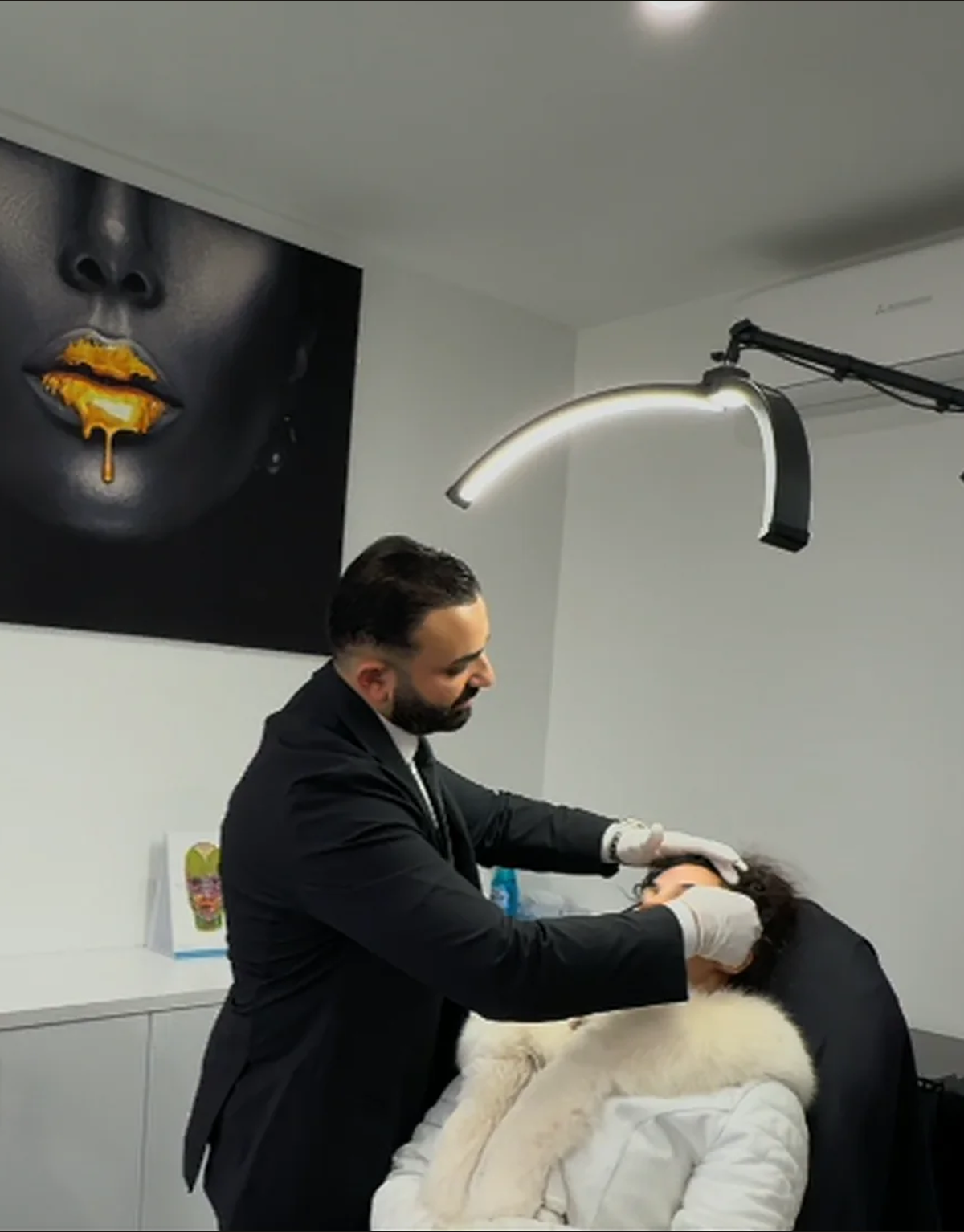
What happens at your consultation in Glenroy

Appointments run 30 to 45 minutes. A consultation fee applies and is confirmed when you book. No referral is required to attend, although where the history suggests a medical, orthodontic or surgical cause, that is where you will be directed.

01

Discussion

When you first noticed the asymmetry, whether it appeared suddenly or gradually, whether it is changing, your medical history including facial nerve conditions, current medications, and what you are hoping to address.
02

Assessment

The face is examined at rest and in movement, both sides compared in standard views, muscle activity assessed between sides, chewing side dominance identified, skin quality compared, and photographic record made in standard views.
03

Information

Which category of asymmetry your presentation fits, whether medical or specialist assessment is warranted first, what a cosmetic assessment can and cannot contribute, risks, alternatives and the option of proceeding with nothing.
04

Decision

You are not asked to decide on the day. Time to consider information is part of informed consent.
12  /  Location

Facial asymmetry assessment
in Melbourne

The practice is in Glenroy, in the City of Merri Bek, roughly 13 kilometres north of the central business district. The clinic is on Glenroy Road, close to Glenroy Station on the Craigieburn line and the Pascoe Vale Road corridor.
Patients attend from Glenroy, Hadfield, Fawkner, Oak Park, Gowanbrae, Pascoe Vale, Coburg North, Broadmeadows, Campbellfield and Craigieburn.
13  /  Common Questions

Questions patients
ask

If your question is not answered here, ask it at your consultation. There is time set aside for exactly that.

Yes, mild facial asymmetry is universal and estimated to be present in 21 to 85 per cent of people depending on how strictly it is measured. It is the normal biological situation in humans, not disease. What matters is whether your asymmetry fits a normal mild pattern or something distinct.

Sudden new drooping of one side of the face, particularly with weakness on one side of the body, difficulty speaking, difficulty seeing or sudden severe headache, can be a stroke. Call 000 immediately. Do not wait to see if it passes. Time to treatment is critical.

Bell’s palsy causes weakness of one side of the face, developing over hours to a day or two, without the other stroke features. It affects roughly one in 60 people over a lifetime. If new facial weakness has developed over that timeframe, see a general practitioner or an emergency department within days, because early treatment improves outcome.

Common reasons in adults include chewing side dominance producing masseter enlargement on the preferred side, differential fat compartment change with age, and asymmetric skin changes from sun exposure or sleep position. Skeletal or dental asymmetry can also be the cause, and that would be assessed by an orthodontist or maxillofacial surgeon.

Perfect symmetry is not achievable because it does not exist naturally in anyone. What is sometimes possible is addressing specific soft tissue changes that have emerged over time, within the context of a face that will remain asymmetric like every face does. Congenital and skeletal asymmetry are addressed by paediatric craniofacial specialists and orthodontic and maxillofacial teams rather than by cosmetic practice.

Signs of skeletal asymmetry include a chin that clearly deviates to one side, teeth that meet unevenly, a smile line that tilts noticeably, and asymmetric bite pressure. These are assessed by orthodontists and maxillofacial specialists, often with three dimensional imaging. Soft tissue asymmetry tends to be subtler and more diffuse.

Yes. Over decades, the masseter muscle on the preferred chewing side thickens with use, in the same way any muscle enlarges with repeated activity. Many people are surprised by which side they favour when they check consciously.

Sleeping consistently on one side is thought to produce measurable soft tissue changes over long periods, though the evidence base is not as strong as some sources present it. It is likely to be a small contributor rather than a main cause.

A consultation fee applies and is confirmed when you book.

Related concerns

The lower face is often assessed together

Bruxism
Contour region
Mentalis region
Platysmal region
Dr Ibrahim Hawli
Written and clinically reviewed by
Dr Ibrahim Hawli, MBBS
Registered medical practitioner, Ahpra registration MED0002627622. Level 1 Certification, American Academy of Aesthetic Medicine. Advanced training in non surgical nasal assessment with Aesthetic Intelligence.
Last reviewed: [insert month year]  ·  Next review due: [insert month year]

Understanding first.

Assessment second.
This page provides general information about facial asymmetry and does not constitute medical advice. Any cosmetic medical procedure carries risks. Individual outcomes vary and not all people are suitable candidates. Perfect symmetry is not achievable. Where an acute, congenital, neurological, skeletal or dental cause is suspected, assessment by the appropriate practitioner is recommended. Surgery is not performed at this practice. Any decision follows an individual consultation and assessment with a registered medical practitioner.