
Clenching jaw: why it happens,
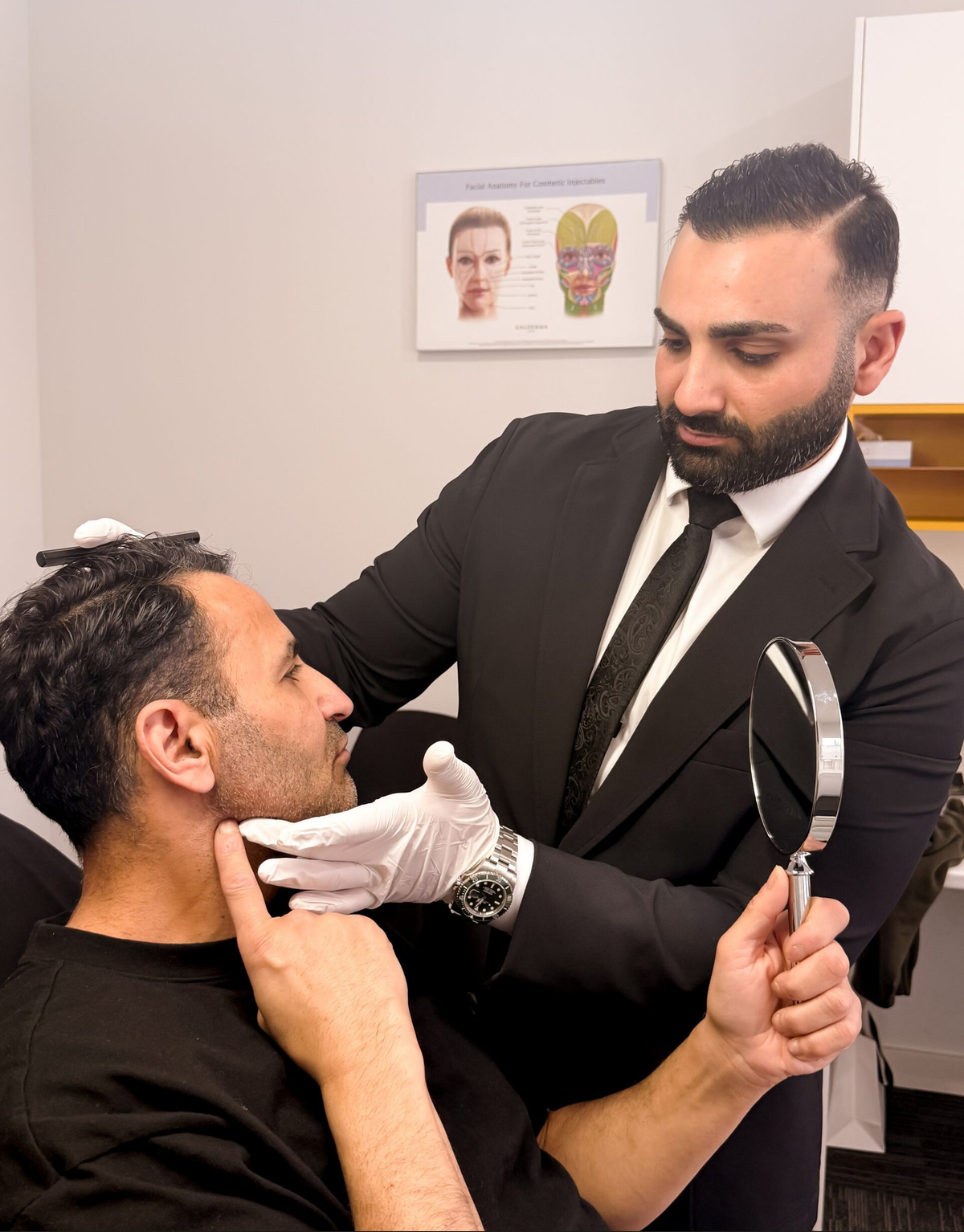
Jaw clenching and grinding is called bruxism, and it comes in two forms: awake bruxism, which is sustained clenching linked to stress and concentration, and sleep bruxism, which is rhythmic grinding tied to sleep arousal patterns. It is no longer thought to be caused by how your teeth meet. Diagnosis and dental management belong to a dentist, and where clenching disturbs your sleep it can point to a sleep breathing problem that needs medical assessment. The one area a cosmetic practice contributes to is the masseter, the chewing muscle that enlarges with chronic clenching and can widen the lower face.
What jaw clenching is,
and its medical name
Awake and sleep bruxism
Awake bruxism
Sleep bruxism
It is not about your bite,
and that is a recent change
What actually
drives clenching
Stress and emotional state
The nervous system and sleep arousal
Hormonal and neurotransmitter factors
Certain medications and substances
Jaw clenching symptoms,
and what each one means
The signs you are clenching
without knowing
- Jaw muscle fatigue or tightness, building through the day or worst on waking
- Tenderness in the jaw muscles, at the angle of the jaw or in front of the ears
- A ridge or white line along the inside of your cheeks, called linea alba
- Scalloped or indented edges on the sides of your tongue
- Headaches, particularly on waking or in the temples
- Teeth that look flattened or worn, or increased tooth sensitivity
- Being told you grind at night by someone who shares your bed
- Catching yourself clenching when you consciously check, several times a day
Why chronic clenching
squares the jaw
When jaw clenching is a
sign of a sleep problem
- Snoring, particularly if it is loud or has been noticed by someone else
- Waking unrefreshed despite a full night in bed
- Daytime sleepiness
- Having been told you stop breathing in your sleep
What clenched jaw
treatment actually involves
A dental occlusal device
Addressing the driver
Sleep assessment
Physiotherapy or oral medicine
Reducing an enlarged chewing muscle
Review of medications and stimulants
Why a dentist is
central to this
Where a cosmetic assessment fits
How jaw clenching
is assessed
- Whether the pattern fits awake bruxism, sleep bruxism, or both
- The physical signs, including masseter size and tenderness, and the cheek and tongue cues
- The degree of masseter enlargement and its contribution to lower-face width
- Symmetry between the two sides
- Stress, sleep and lifestyle factors, and current medications
- Whether you have a dentist assessing the clenching and any tooth damage, and referral if not
- Whether the pattern suggests a sleep disorder requiring medical assessment
- The impact on your daily life and comfort
- Whether anything is clinically appropriate, including the option of nothing, and what belongs with a dentist or doctor rather than here
What to know before
your consultation
Factors that are relevant
- Whether the clenching has been assessed by a dentist, and whether tooth damage is present
- Whether the pattern suggests a sleep disorder needing medical assessment
- Pregnancy or breastfeeding
- Certain neuromuscular conditions
- Certain medications
- Difficulty chewing, existing jaw joint problems, or significant jaw pain, which need dental or medical assessment
- Whether the concern is the behaviour, the tooth wear, or the appearance of the enlarged muscle, since these belong in different places
- Unrealistic expectations about achievable change
What happens at your consultation in Glenroy
Appointments run 30 to 45 minutes. A consultation fee applies and is confirmed when you book. No referral is required to attend, although for diagnosis and dental management a dentist is the appropriate practitioner.
Discussion
Assessment
Information
Decision
Jaw clenching assessment in
Melbourne: where the clinic is
Questions patients
ask
If your question is not answered here, ask it at your consultation. There is time set aside for exactly that.
Bruxism. It covers both clenching, which is static forced closure of the jaw, and grinding, which is dynamic movement of the jaw with the teeth in contact. It occurs in two forms: awake bruxism during the day, and sleep bruxism at night.
Jaw muscle fatigue or aching, tenderness at the angle of the jaw, headaches in the temples or on waking, tooth sensitivity or flattened teeth, a ridge along the inside of the cheek, scalloped edges on the tongue, and in some people a lower face that has become wider. Clicking or locking involves the joint rather than the muscle and belongs with a dentist or physiotherapist.
Awake bruxism is defined by lack of awareness. It is a stress and concentration response, and people commonly clench while focused, driving or working without noticing. Physical signs like a ridge along the inside of the cheek, indentations on the tongue, and afternoon jaw fatigue reveal it.
Current evidence says largely no. For years it was blamed on how the teeth meet, but recent studies suggest occlusal factors have minimal influence, and bruxism is now understood as driven by the nervous system as part of the sleep-wake cycle, particularly for the sleep form. Stress and sleep are the main drivers.
Most of it is not cosmetic. A dental occlusal device to protect the teeth, addressing the stress or habit driving it, a sleep assessment if it happens at night, and physiotherapy or oral medicine where the joint is involved. Where chronic clenching has enlarged the chewing muscle and widened the lower face, that muscle can be assessed at a cosmetic practice, but it addresses a consequence rather than the cause.
Sustained muscle contraction produces the same soreness as any overworked muscle, and the force also transmits through the teeth into the supporting structures. Pain in front of the ear, or clicking and locking, can involve the joint itself rather than the muscle, and that needs a dental or physiotherapy assessment.
You often cannot tell directly, but signs include waking with jaw tightness or headache, tooth sensitivity, worn teeth, or being told you grind by someone who shares your bed. A dentist can confirm it from the wear patterns on your teeth. If you also snore or wake unrefreshed, a sleep assessment may be warranted.
Yes. The masseter, the main chewing muscle at the angle of the jaw, enlarges with chronic heavy clenching, the way any muscle grows with repeated use. An enlarged masseter widens the lower face and squares the jaw. This is the one part of the picture a cosmetic assessment addresses.
A dentist for the diagnosis, the tooth damage and a protective night guard, since bruxism is diagnosed and dentally managed by a dentist. A doctor if your grinding disturbs your sleep or you snore, since that can point to a sleep breathing problem. A cosmetic assessment is relevant only for the enlarged muscle and lower-face width.
Sleep bruxism is associated with the arousal patterns of sleep and with sleep disorders including obstructive sleep apnoea. If you grind at night and also snore, wake unrefreshed, or have been told you stop breathing in your sleep, that should be assessed medically, as it matters more than the grinding itself.
Stress is the strongest established association, especially for awake bruxism. Studies link clenching to stress, anxiety and restlessness, and recent work points to the stress hormone cortisol as part of the mechanism. Managing stress is part of managing awake clenching.
A consultation fee applies and is confirmed when you book.
The lower face is assessed as a whole
