
Excessive sweating: causes, types,
What excessive sweating is,
and its medical name
Primary and secondary:
Primary hyperhidrosis
Secondary hyperhidrosis
The six-point self-check
for primary hyperhidrosis
When excessive sweating
is a warning sign
- Began suddenly or recently, particularly in adulthood
- Occurs at night, soaking bedding or nightclothes
- Affects one side of the body only, or an unusual asymmetric area
- Is generalised over the whole body rather than focal
- Is accompanied by weight loss, fever, a racing heart, tremor, or feeling unwell
- Started after beginning a new medication
- Has changed in a long-standing pattern, in intensity or location
What causes primary
hyperhidrosis
Where it happens,
and how common it is
Commonly affected, often alongside the palms.
The approaches
that exist
Topical treatments
Iontophoresis
Prescription oral medications
Energy-based and device approaches
Other medical approaches
Surgery
Excessive sweating
and Medicare in Australia
How excessive sweating
is assessed
- A full history, establishing the pattern against the primary versus secondary criteria
- Age of onset, family history, and whether the sweating stops during sleep
- Which areas are affected, and whether the pattern is symmetric
- Current medications, since several can cause secondary sweating
- Relevant medical history, including thyroid symptoms, weight change and general health
- The degree of impact on daily life, work and wellbeing
- Whether the pattern suggests a secondary cause requiring investigation
- Where indicated, a visualisation test such as the iodine-starch test, which maps exactly where sweat is being produced
- Whether anything is clinically appropriate, including referral to a GP where a secondary cause is suspected
What to know before
your consultation
Factors covered
- Whether the pattern fits primary or secondary hyperhidrosis
- Age of onset and family history
- Whether the sweating stops during sleep
- Current medications, several of which can cause sweating
- Thyroid symptoms, weight change, and general health
- Pregnancy or breastfeeding
- Any recent change in a long-standing pattern
- What you have already tried
- The impact on your daily life
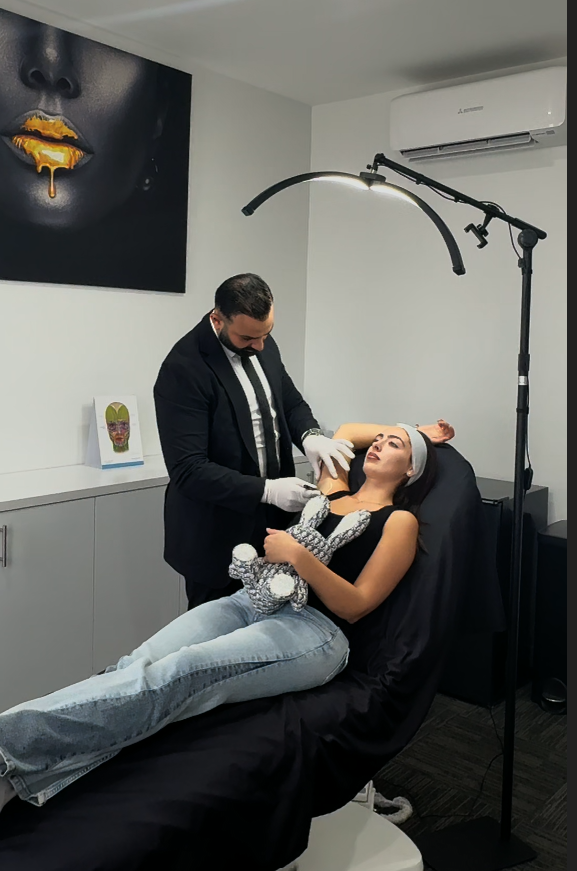
What happens at your consultation in Glenroy
Appointments run 30 to 45 minutes. A consultation fee applies and is confirmed when you book. No referral is required to attend, although for a suspected secondary cause a general practitioner is the appropriate first stop.
Discussion
Assessment
Information
Decision
Hyperhidrosis assessment
in Melbourne: where the clinic is
Questions patients
ask
Hyperhidrosis. It means sweating beyond what the body needs to regulate its temperature. It divides into primary, which is benign and usually starts young, and secondary, which is caused by an underlying condition or medication.
In primary hyperhidrosis, the sweat glands are normal but the nerves controlling them are overactive, with a strong genetic component. In secondary hyperhidrosis, the sweating is caused by something else, such as thyroid overactivity, diabetes, hormonal change, a medication, or another condition. The two require different responses.
Primary hyperhidrosis is likely if you have sweated excessively for at least six months with four or more of these: it affects the underarms, palms, soles or face, it is symmetric, it stops during sleep, it happens at least weekly, it began at 25 or younger, and there is a family history. If your sweating began later in life, is one-sided, or happens at night, it should be assessed medically first.
Usually not. Most is primary hyperhidrosis, which is benign. But sweating that starts suddenly in adulthood, happens at night, affects one side only, is generalised, or comes with weight loss, fever or feeling unwell can indicate a secondary cause and should be checked by a doctor.
That is characteristic of primary focal hyperhidrosis. The overactive nerve signalling driving it settles during sleep. This is actually a reassuring feature, because sweating that continues or worsens at night points toward a different, secondary cause that needs medical assessment.
No. Primary hyperhidrosis is a pattern of nerve signalling and occurs in people of every body type and fitness level. It is not caused by poor hygiene either. These misconceptions cause unnecessary shame around a common medical condition.
In Australia, severe primary underarm hyperhidrosis that has not responded to first-line topical treatment may be eligible for a Medicare-subsidised pathway under PBS criteria. Eligibility is specific and assessed individually. The current requirements are confirmed at consultation, as they are set nationally and can change.
The underarms most commonly, followed closely by the palms, then the soles, and less often the face and scalp. Many people have more than one area. Palms and soles together, or underarms and palms, are common combinations.
A consultation fee applies and is confirmed when you book.
Medical conditions assessed at this practice
