
About the practice
About
Tajmeel Cliniq
Tajmeel Cliniq opened in Glenroy in 2024 and operates from a single location. Dr Ibrahim Hawli, MBBS, is the sole practitioner.
The practice provides assessment and management of facial changes associated with ageing and muscle activity, along with two medical conditions: excessive sweating and jaw clenching.
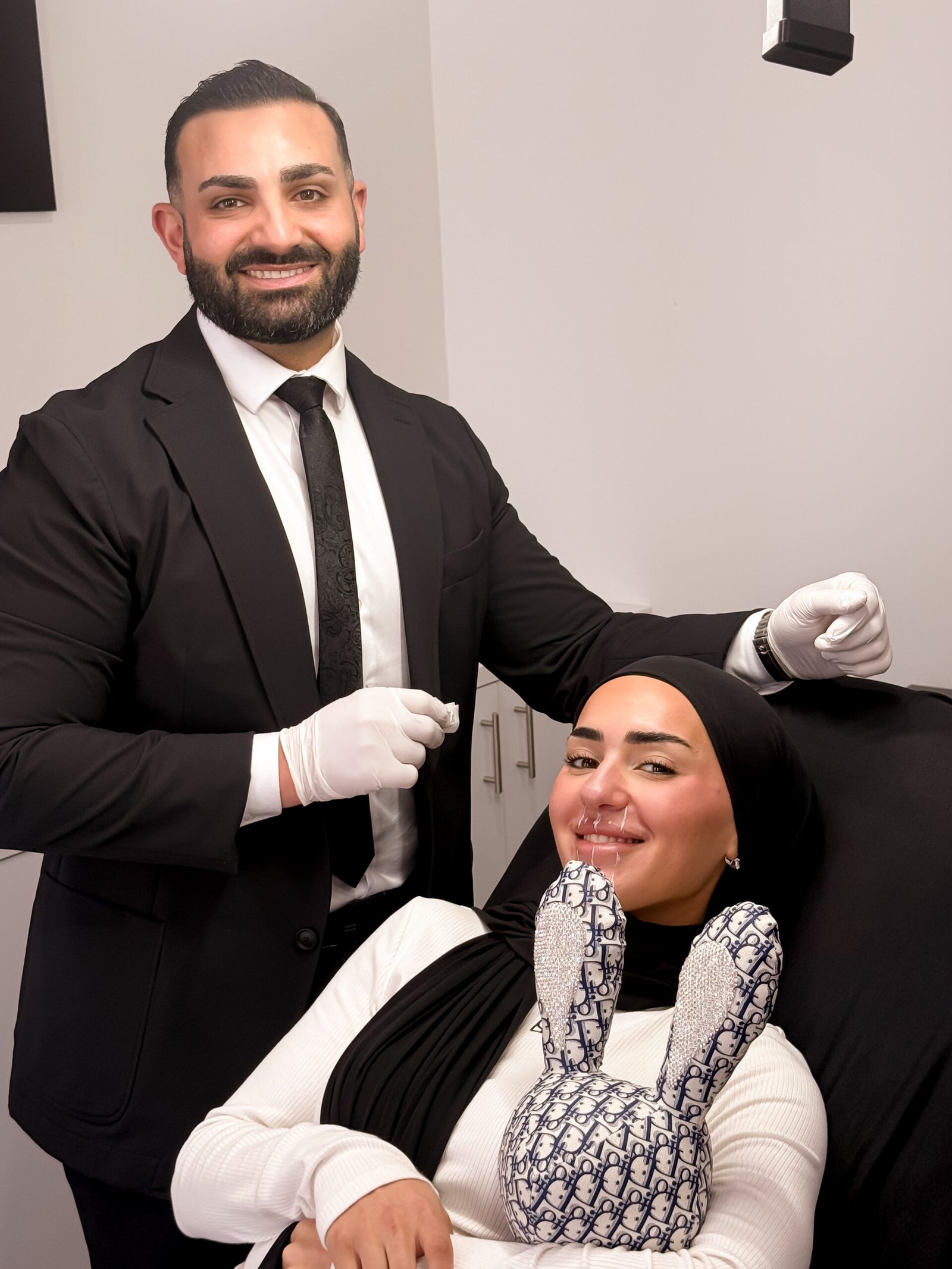
At a glance
The practice
in five lines
Established
2024
Locations
One
Practitioners
One
Surgery performed
None
Referral
Not required
Structure
A single location,
a single practitioner
This is a small practice by design. There is one consulting doctor, one location and no rotating roster of practitioners.
That means the person who takes your history is the person who examines you, and the person who examines you is the person who carries out anything that follows. Nothing is delegated. There is no separate prescriber consulted by video, and no handover between the assessment and the procedure.
For patients this has one practical consequence worth knowing: appointment availability is limited by one doctor’s hours rather than a team’s.
The practitioner
Who Dr Hawli is
Dr Ibrahim Hawli holds a Bachelor of Medicine and Bachelor of Surgery, and is registered as a medical practitioner with the Australian Health Practitioner Regulation Agency. The registration can be verified on the public Ahpra register.
His further training includes a Level 1 Certification from the American Academy of Aesthetic Medicine and advanced training in non surgical rhinoplasty with Aesthetic Intelligence.
Scope of practice
Not a specialist plastic surgeon or dermatologist
He is a medical practitioner working in cosmetic medicine. He is not a specialist plastic surgeon or a specialist dermatologist, and this practice does not perform surgery.
Under the Ahpra guidelines, practitioners must not use titles or descriptions that imply specialist registration they do not hold. Stating the scope plainly is more useful to patients than leaving it ambiguous.
Method
How this cosmetic clinic in Glenroy approaches assessment
Assessment at this practice is structured rather than conversational, and it happens before any recommendation is made.
Examination of facial structure across layers
Facial change with age is not confined to the skin surface. Bone volume reduces. Deep fat pads reduce in size and shift position. Muscle activity patterns alter. Skin quality and elasticity change independently of all of the above. Assessment examines those layers together, including the midface, temples, lower face, chin projection, jaw contour and the perioral region, along with the position of soft tissue relative to underlying bone.
Assessment of muscle activity
Some lines are present at rest. Others appear only with expression. The distinction affects what is and is not achievable, and it can only be assessed by observing movement in person. Areas assessed include the forehead, the area between the brows, the region around the eyes, the jaw muscles and the neck.
Medical history and screening
History taking covers current medications, allergies, previous procedures, neuromuscular conditions and pregnancy or breastfeeding. Assessment also includes discussion of what has prompted the enquiry and what the patient expects. The Ahpra guidelines require practitioners to assess whether a patient has an underlying psychological condition, including body dysmorphic disorder, that would make a cosmetic procedure inappropriate. Where that assessment indicates a procedure is not in the patient’s interest, Dr Hawli declines and explains why.
Review over time
Where a procedure is undertaken, review appointments allow assessment of the result and adjustment of clinical planning at subsequent visits.
Some consultations at this practice end with a recommendation to do nothing. That is a legitimate clinical outcome, not a failed appointment.
Scope
What this practice assesses
Facial concerns
Lines associated with expression and lines present at rest, across the forehead, between the brows, around the eyes, around the mouth and on the neck. Loss of facial volume in the midface and temples. Lip shape, symmetry and proportion. Chin projection and jaw definition. Facial asymmetry. Nasal shape and proportion, assessed for whether a non surgical approach is suitable, and when it is not.
Excessive sweating
Known clinically as hyperhidrosis, affecting the underarms, hands, feet, face or scalp. Excessive sweating can have secondary causes, including thyroid conditions, and these are screened for before management is considered. Medicare rebates apply in some cases of severe underarm sweating where specific eligibility criteria are met, assessed individually.
Jaw clenching and teeth grinding
Known clinically as bruxism, including associated jaw pain and headache. Dental management is appropriate in some cases and referral to a dentist will be recommended where it is.
Clinical position
What this practice
holds to
Four positions that determine what is undertaken here, how, and what is declined.
01
Evidence over trend
Clinical decisions are based on facial assessment, measurable proportion and published clinical evidence rather than prevailing aesthetic preferences.
02
Structure before surface
The face is assessed as a layered system. Underlying volume change is considered before surface texture.
03
Anatomical caution
Assessment accounts for the position of facial blood vessels, nerve pathways and muscle anatomy. The purpose is to reduce risk. No procedure is without risk, and risk cannot be removed.
04
Declining is part of the practice
Requests that are not clinically appropriate, or where expectations cannot reasonably be met, are declined.
Patient information
Risks, outcomes and what
this page does not claim
No procedure is without risk. Potential risks, likely benefits, recovery requirements and alternatives, including the option of proceeding with nothing, are discussed in full before consent is sought.
Outcomes depend on the individual. Facial anatomy, age, medical history and tissue quality all affect what is achievable. Results vary between patients and no outcome is guaranteed. Suitability requires examination and a medical history.
Cosmetic procedures are not provided to anyone under 18 at this practice.
Location
Visiting the clinic
Address
Level 1, 10 Glenroy Road
Glenroy VIC 3046
Level 1, 10 Glenroy Road
Glenroy VIC 3046
The clinic sits in the City of Merri Bek. Glenroy is served by the Craigieburn railway line.
Patients attend from Glenroy, Hadfield, Fawkner, Oak Park, Gowanbrae, Pascoe Vale, Coburg North, Broadmeadows and Campbellfield.
Written and clinically reviewed by Dr Ibrahim Hawli, MBBS. Last reviewed [insert month and year]. Next review due [insert month and year].
Information on this website is general in nature and does not replace individual medical advice. All medical and cosmetic procedures carry risk. Suitability, risks, benefits and alternatives are discussed at consultation. Outcomes vary between individuals.